
Within the 17 evidence-based clinical competencies, the first focuses on the management and regulation of emotions. This skill is fundamental to reducing emotional distress and sustaining therapeutic change over time.
What do coping and emotional regulation mean?
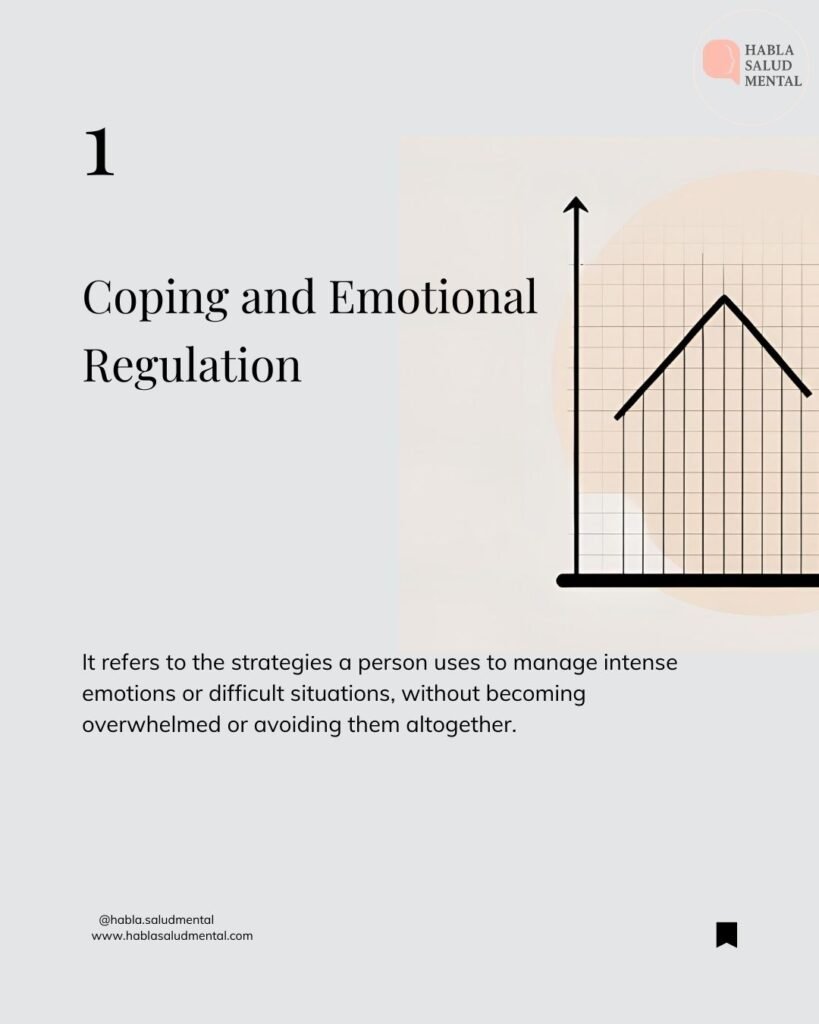
They refer to the strategies a person uses to manage intense emotions or difficult situations, in a way that allows them to respond without becoming overwhelmed or resorting to complete avoidance.
Some practical tools include:
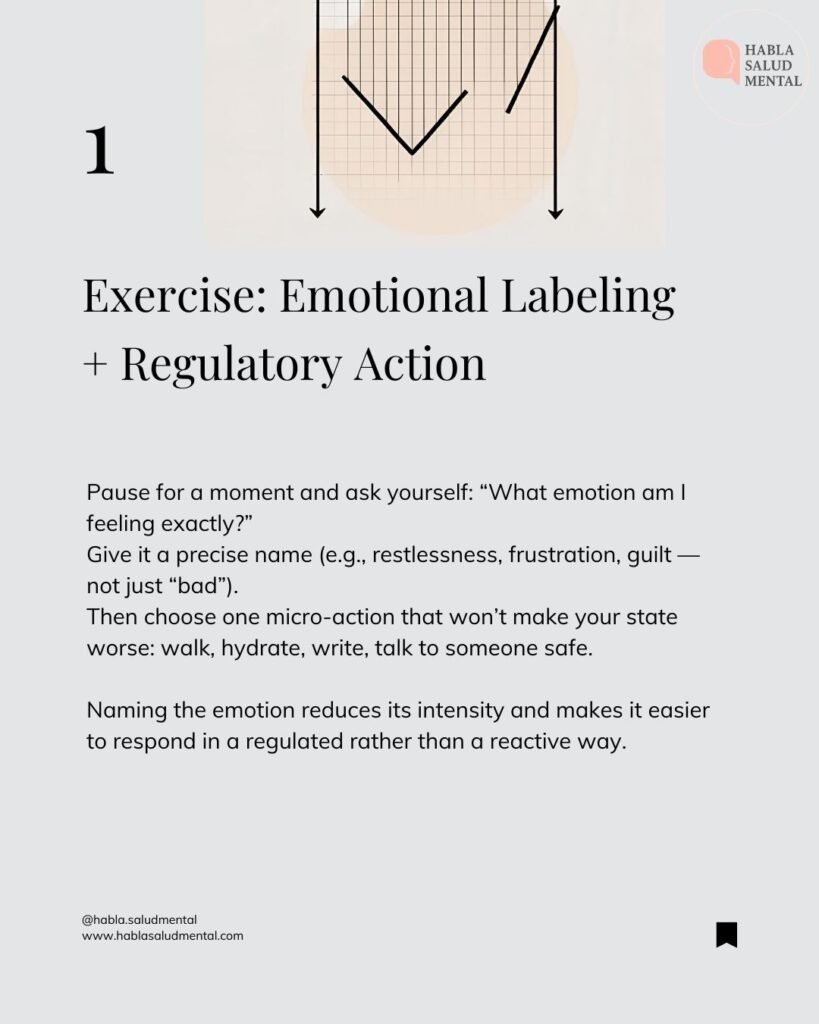
- Emotional identification: putting a name to what we feel (for example, differentiating between frustration, guilt, anger, or fear, instead of just saying “I feel bad”).
- Conscious breathing and physiological calming techniques.
- Regulating actions: carrying out micro-actions that support balance (walking, hydrating, writing, talking with someone trustworthy).
Naming the emotion and accompanying it with a regulating action facilitates a more adaptive and less reactive response.
A clinical application example
Let’s imagine a person who feels intense anxiety before a work meeting.
- If they identify the emotion as “fear of making a mistake” and practice conscious breathing, they can reduce physiological activation.
- Then, they choose a regulating micro-action, such as preparing a note with the key points.
This process does not eliminate the emotion, but it makes it manageable and allows them to act in a more functional way.
Importance in therapy
Coping and emotional regulation are transdiagnostic competencies: they appear in anxiety, depression, trauma, and other clinical conditions. Training in them improves resilience and sustains therapeutic change.